
How to Get More 5-Star Reviews for Your Salon (Without Feeling Pushy)
Timeli.sh Team|July 22, 2026|11 min read|No comments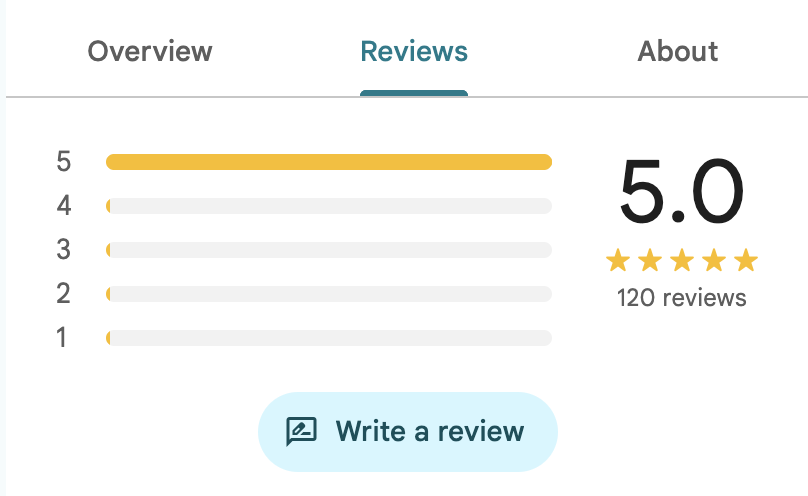
Before a new client ever sits in your chair, they have already formed an opinion about your salon.
They found you on Google. They looked at your photos. And then they read your reviews. Every single one of them. In 2026, 94% of clients check reviews before choosing a new salon, and 88% specifically read them before booking a service. That means your Google rating is often the first real impression you make on someone who has never met you.
The uncomfortable truth is that most salon owners know reviews matter and still do almost nothing to get them. They rely on the occasional client who volunteers one, check their rating a few times a year, and hope for the best.
The salons that consistently win new clients from Google are not doing anything complicated. They have just made getting reviews a habit rather than an afterthought.
This guide covers exactly how to build that habit, what to do when reviews go wrong, and why the math on reviews is more compelling than most salon owners realize.
What Your Star Rating Is Actually Worth
Before getting into tactics, it helps to understand the stakes.
The average hair salon holds a 4.6 star rating on Google in 2026. Salons rated below 4.0 stars face a measurable drop in bookings because nearly half of all potential clients filter out anything under 4.5 stars before they even look at the listing.
For a salon generating $325,000 annually, moving from a 4.2 to a 4.7 star rating represents an estimated $16,000 to $29,000 in additional annual revenue. Not from serving more clients or raising prices. Just from having a better rating that converts more of the people who were already finding you.
Salons that actively manage their reviews see 26% higher booking rates compared to those that do not engage with their feedback at all. And salons that respond to every review average a star rating 1.2 points higher than those that do not respond.
That last number is worth sitting with. Responding to reviews is not just good manners. It is a measurable driver of your overall rating.
Why Most Clients Do Not Leave Reviews (And What to Do About It)
Happy clients rarely leave reviews unprompted. Not because they do not want to help you, but because they get home, get busy, and by the time they think about it again the moment has passed.
The clients who leave reviews without being asked are usually the ones at the emotional extremes: genuinely delighted, or genuinely unhappy. Everyone in the middle, the satisfied regulars who loved their visit and will definitely come back, tends to say nothing.
That means the natural review distribution skews negative relative to the actual experience most clients have. You are serving mostly happy clients and collecting a representative sample that understates how good you actually are.
The fix is simple: ask. Specifically, ask at the right moment, in the right way.
Research consistently shows that the majority of clients will leave a review when asked directly. The barrier is not willingness. It is friction and forgetting.
The Best Moment to Ask: Right After the Appointment
The highest-converting moment to ask for a review is at the end of the appointment, while the client is still in your space, feeling good, and looking at results they love.
This is not a hard sell. It is a natural, warm request from someone they just spent an hour with.
A simple line works well:
"It was so great having you in today. If you enjoyed your visit, a Google review would mean so much to us. I can send you a link right now if that makes it easier."
Most clients will say yes on the spot. Texting the link immediately, before they leave the building, captures them while the motivation is still there. Telling them to "just Google us" requires too much effort and most will never follow through.
A few things that make the in-person ask work better:
Make it personal, not transactional. "It would mean a lot to us" lands differently than "we need more reviews." One sounds human. The other sounds like a chore.
Ask only after a genuinely great appointment. Asking every client regardless of how things went is how you accidentally manufacture negative reviews. Use your judgment. If you sense the client was not fully happy, address that first rather than sending them straight to Google.
Have the link ready. Do not make clients search for your profile. Your Google review link can be shortened and saved as a text template so you can send it in seconds.
The Follow-Up Message: Your Second Chance
Not every client will leave a review at checkout even if they said they would. Life intervenes. The link sits unclicked. A well-timed follow-up message the next day gives them a second chance while the experience is still fresh.
Keep it short and warm:
"Hi [name], it was so great seeing you yesterday. If you have a moment, a Google review would really help us reach new clients. Here is the link: [link]. Thank you so much."
This message lands in the same window as your post-appointment follow-up, which we covered in the client retention post. The two can be combined into a single message or sent separately depending on your preference. Either way, the timing is the same: within 24 to 48 hours of the appointment.
Timeli.sh sends automated follow-up messages after appointments. You write the message once, set the timing, and it goes out automatically after every visit without any manual effort on your part.
Make Leaving a Review Effortless
The easier you make it, the more reviews you get. Every extra step between a willing client and a submitted review is a drop-off point.
A few ways to reduce friction:
A QR code at checkout. A small card or countertop sign with a QR code that opens directly to your Google review form is one of the highest-converting review tools a salon can have. Clients scan it, it opens immediately, and they can leave a review before they have even put their phone away. The text on the card needs to be simple: "Loved your visit? Leave us a review."
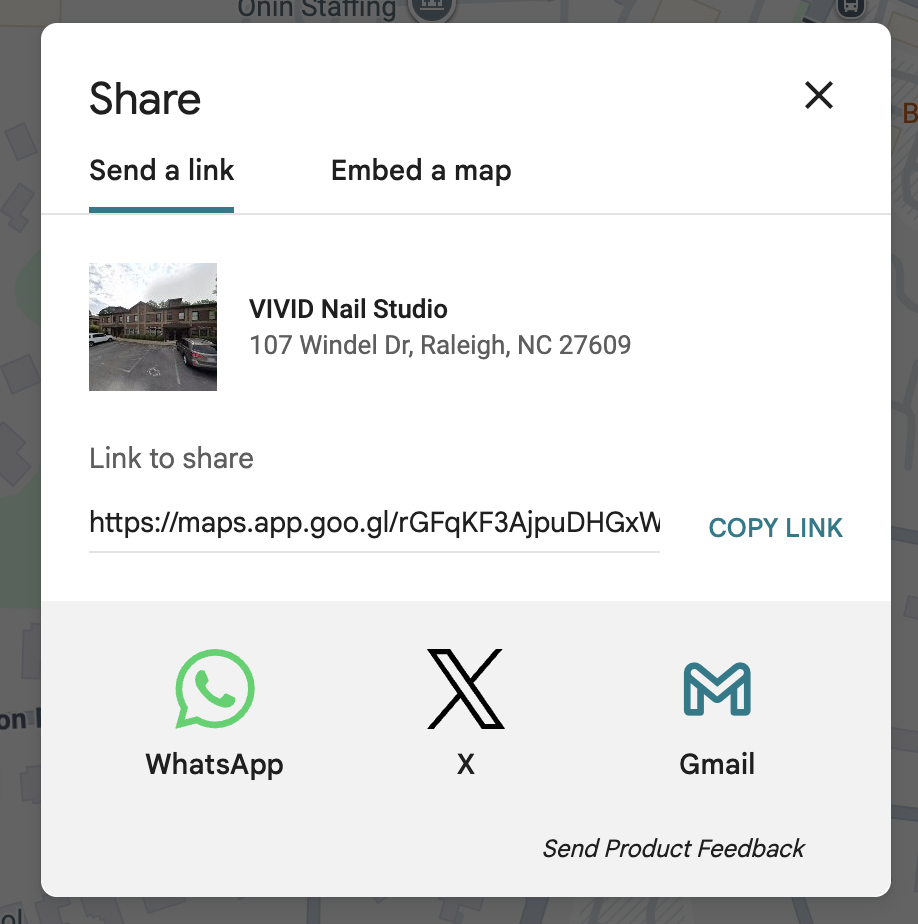
A short link in your SMS. Your Google review URL can be shortened using Google Maps “Share” button to something clean and easy to tap on a phone. Include it in your post-appointment message so clients can reach the review form in one tap.
A link in your email signature. If you communicate with clients by email, a subtle line at the bottom of every email, "Happy with your visit? We'd love a Google review," with a link, catches clients at natural touchpoints over time.
Your booking confirmation. A brief mention of reviews in your booking confirmation or reminder messages keeps it top of mind without feeling like a hard sell.
Responding to Reviews: The Part Most Salons Skip
Responding to every review is one of the highest-impact and most consistently neglected things a salon owner can do.
52% of salons never respond to negative reviews. That is the single largest missed opportunity in the industry, because how you respond to a bad review is often more influential on potential clients than the review itself.
Here is how to approach responses for both cases.
Responding to Positive Reviews
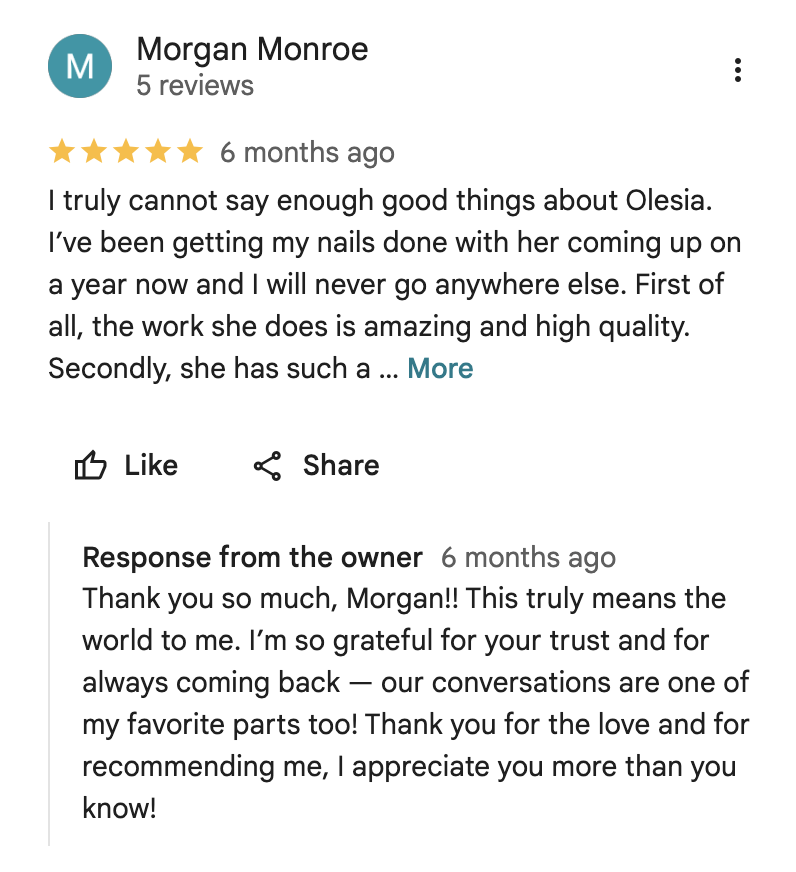
Keep it warm, specific, and brief. Acknowledge something from the review if possible, thank them genuinely, and mention that you look forward to seeing them again. Do not use a template that sounds copy-pasted. Clients can tell.
"Thank you so much, [name]. We are so glad you loved your color treatment. Jamie really enjoyed working with you and we cannot wait to see you at your next visit!"
A personal response signals that a real human runs this business and cares about the people who come in. That matters to potential clients reading your reviews.
Responding to Negative Reviews
This is where most salon owners either go quiet or, worse, go defensive. Neither helps.
A calm, professional response to a negative review does several things. It shows potential clients that you take feedback seriously. It demonstrates how you handle problems, which is actually a trust builder. And it often gives you the opportunity to resolve the situation, turning a dissatisfied client into a loyal one.
A framework that works:
Acknowledge the experience without being defensive
Apologize for the fact that it did not meet expectations, even if you disagree with the details
Offer to make it right through a direct channel (phone or email, not back-and-forth on Google)
Keep it short
"Thank you for taking the time to share this feedback, [name]. We are sorry to hear your visit did not meet your expectations. We would love the chance to make it right. Please reach out to us directly at [contact] and we will take care of you."
What you should not do: argue, explain at length, make the client sound unreasonable, or match their tone if they were harsh. Potential clients reading the exchange are evaluating you, not the reviewer.
Top-rated salons respond to reviews within an average of five days. A response a week later is better than no response at all. A response within 24 hours is ideal.
Platforms Beyond Google
Google is the most important review platform for salons by a significant margin, with 81% of consumers using it to evaluate local businesses. That is where to focus most of your energy.
But a few other platforms are worth maintaining:
Yelp still drives a meaningful volume of bookings in some markets, particularly larger cities. If clients are finding and reviewing you there, respond to those reviews too.
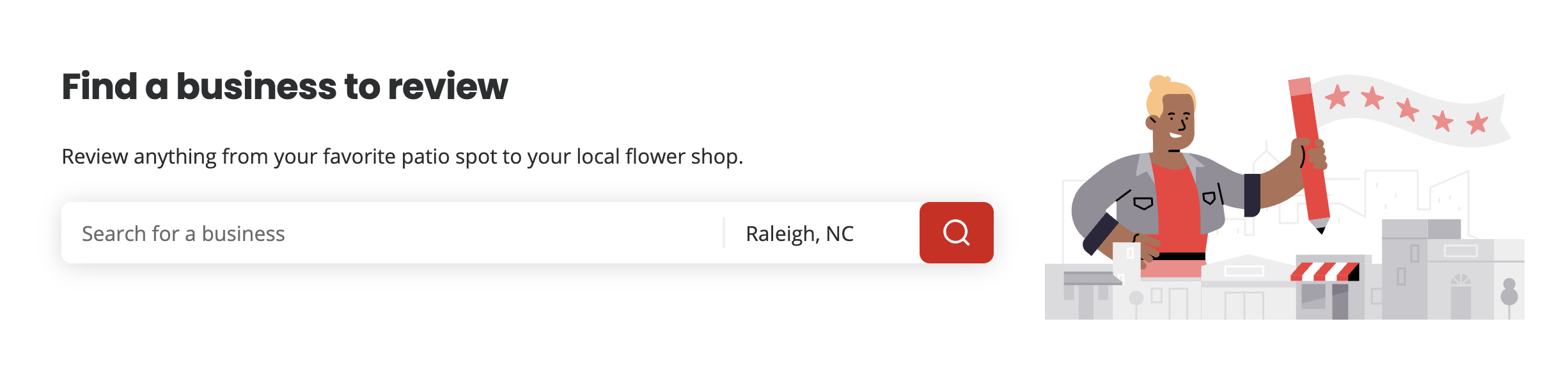
Facebook matters less for discovery than it used to, but clients who are referred through Facebook groups or social posts often check your Facebook reviews as a secondary signal. Keep your page claimed and respond when reviews come in.
Your booking website. Add your reviews directly to timeli.sh page to show what real people say to attract possible customers. Keep the reviews real; do not create fake ones. You can copy existing reviews from your Google page.
You do not need to manage every platform aggressively. You need to be present, responsive, and consistent on Google first, and attentive to the others when activity happens.
What Not to Do
A few practices that seem helpful but will hurt you:
Do not offer incentives for reviews. Offering discounts, free services, or gifts in exchange for a Google review violates Google's policies. If caught, reviews can be removed and your profile can be penalized. Ask sincerely, not transactionally.
Do not ask for reviews in bulk. If fifteen reviews come in over one week after years of very few, Google may flag them as suspicious and remove them. Build reviews steadily over time rather than in bursts.
Do not ask unhappy clients. This sounds obvious but the pressure to build review volume can lead to asking indiscriminately. A client who was not fully happy and then gets a review request is likely to use it as an outlet. Ask selectively and with judgment.
Do not ignore negative reviews. A negative review with no response is worse than a negative review with a thoughtful, professional reply. Silence looks like you either do not care or do not have anything to say.
Building the Habit
The salons with the strongest review profiles are not doing anything extraordinary. They have made two things consistent: asking at the end of every appointment, and following up with a link the next day.
That is the whole system. Applied consistently across every client, every visit, over months and years, it compounds into a profile that converts browsers into booked clients without any additional marketing spend.
Your Google rating is not a score. It is a sales channel. Treat it like one.
If you are already on Timeli.sh, your automated follow-up message is the right place to embed your Google review link. Set it up once, and it runs on its own after every appointment.
Start your free trial at Timeli.sh
Questions about setting up your post-appointment follow-up message or linking to your Google review page? Leave a comment below or reach out to our support team.
No comments yet. Be the first to comment.
Add comment
 The all-in-one appointment scheduling platform for modern businesses.